Downloadable Software, by my collaborators or me
-
-
by Joel Ferstay. Vis tool for analyzing genetic
sequence variants. Released August 2013.
-
-
by Maryam Booshehrian. Visual tool for fisheries management
data analysis. Version 1.0 released January 2010, latest version
2.5.1 released August 2012.
-
-
by Stephen Ingram. Visual tool for dimensional
analysis and reduction. Released March 2010.
-
-
by Miriah Meyer. Exploration tool that supports the comparison of
multiple gene expression data sets defined both spatially and
temporally. Released October 2010.
-
-
by Miriah Meyer. Tool that visualizes temporal gene expression data over multiple molecular pathways and across multiple species. Released June 2010.
-
-
by Miriah Meyer. Browser that enables analysis of comparative genomics data through visualization across multiple scales. Released December 2009.
-
-
by Stephen Ingram. GPU and CPU versions of fast and robust multilevel multidimensional
scaling algorithm. Released July 2008.
-
-
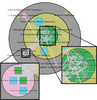
by Daniel Archambault. Multilevel graph hierarchy exploration tools, built on the Tulip framework. Released July 2008.
-
-
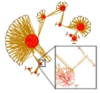
by Daniel Archambault. Quasi-tree graph layout, built on the Tulip framework. Released
May 2008.
-
-
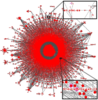
by Daniel Archambault. Feature-based multilevel graph layout, built on the Tulip framework. Released May 2008.
-
-
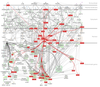
by Aaron Barsky. Cytoscape plugin for compartmentalized network
layout, for instance using subcellular localization
annotations, and comparing quantitative data from multiple
experiments. Version 2.0 (compatible with Cytoscape 2.6) released May 2008. Version 2.8.2
(compatible with Cytoscape 2.8.2) released January 2012.
-
-
by James Slack and Kristian Hildebrand. SJ is open-source software for browsing and comparing gene sequences, using accordion drawing. Version 1.2 released Feb 2005.
-
-
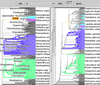
by James Slack, Kristian Hildebrand, Tamara Munzner, Francois Guimbretiere, Li Zhang, Yunhung Zhou. TJ is open-source software for browsing and comparing trees. It uses
accordion drawing, an information visualization technique that
features rubber-sheet navigation and the guaranteed visibility of
marked areas. It was specifically designed for biologists who want to
compare phylogenetic or taxonomic trees, but can work for any
hierarchies. It can handle trees of up to several million nodes.
- [Download source
or binaries (Mac, Windows, Linux)]
-
-
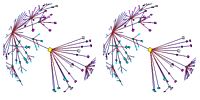
by Tamara Munzner. HypViewer is the 3D hyperbolic module used in Site Manager below,
now available for free noncommercial use. Contact SGI for licensing for
commercial use.
- [Download source or binaries (Linux, Irix, Windows)]
-
-
by Alan Braverman, Greg Ferguson, and Tamara Munzner. Site Manager was free software from Silicon Graphics for webmasters
and content creators. It included a 3D hyperbolic view of the link
structure of the target web site. That module was an implementation of
the layout described in my InfoVis 97 paper.
Version 1.1 includes the guaranteed frame rate drawing algorithm
described in a Graph Drawing 98 paper.
- [Download]
(No longer available; was packaged with Irix 6.)
- Site
Manager User's Guide Documentation still available.
-
-
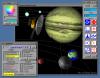
by Stuart Levy, Tamara Munzner, Mark Phillips, and others. I was one of the core team responsible for design, implementation,
documentation, distribution, and maintenance of Geomview, a public
domain 3D interactive visualization package with over one thousand
registered users. We encourage people to let us know how they use our
tools, and have heard back from hundreds of them in a wide variety of
domains, including topology, computational geometry, computer
graphics, robotics, medical imaging, nuclear physics, mechanical
engineering, civil engineering, biomechanics, spacecraft design,
computational electromagnetics, and seismology.
- [Download] version 1.8
- [Download]
previous versions from former
Geometry Center home
-
-
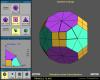
by Tamara Munzner, Charlie Gunn, Stuart Levy, and Olaf Holt. The Triangle Tiling museum exhibit allows people to explore the
connections between symmetry groups, tiling, the Platonic and
Archimedean solids, and non-Euclidean geometry through interactive 3D
graphics. I adapted research software originally written by Charlie
Gunn for museum use with Stuart Levy and Olaf Holt. The program
features mathematical concepts such as the relationship between
Platonic and Archimedean solids, duality, and spherical geometry. The
adaptation was done in collaboration with the Science Museum of
Minnesota, where it is on exhibit. The software was also shown at
``The Edge'', the interactive installation showcase at SIGGRAPH 94.
There's an article
about it in the Geometry Forum archives.
- Download:
- OpenGL SGI binaries
-
IrisGL SGI binaries (Irix 4.x or earlier)
-
Mac and Windows binaries ported by Jeff Weeks, who added additional
functionality and named it KaleidoTile.
- Linux
port created by Pedro Ribeiro for the Atractor exhibit in Lisbon. This
version is also multilingual: you can switch the interface between
English, French, German, Italian, Portuguese, and Spanish. (Note: if
you have troubles running on your machine, try downloading
Geomview 1.8 and
substituting that bin/gvx for the one in this distribution.)
-
-
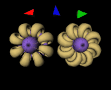
by Tamara Munzner. I was involved in the VRML 1.0 standards process starting in 1994,
when integrating 3D with the Web was a hot new topic. The WebOOGL
software was a proof of concept to back our format proposal. After SGI
Inventor-based proposal won the vote (ours came in second), we
retro-fitted the WebOOGL software into a quasi-compliant VRML 1.0
viewer. Development has not continued since I left the Geometry Center
in 1995, and it is rather unlikely that any 2.0 support would ever be
added. My mathematical
zoo page has seen a lot of traffic since it was part of the
original content pages highlighted during the first big VRML browser
release in March 1995. It contains files in both VRML and the WebOOGL
native 3D format.
-
Download
if you're curious, but this software is not currently supported.
-
-
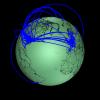
by Tamara Munzner and Eric Hoffman. The CAIDA toolset for network drawing. Some aspects of it are described in a paper on visualizing the MBone. These
tools were used to create a series of short videos, including the Planet Multicast video. The toolkit can also be
used to create Web pages like the MBone or the NLANR caching
hierarchy daily pages, which contain automatically generated 3D and 2D
snapshots of the day's data. Released October 1996.
- Download if you're curious, but this software is not current supported.
Tamara Munzner
Last modified: Sat Apr 5 13:06:02 PDT 2014
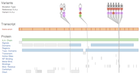 Variant View
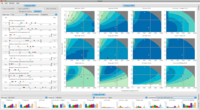 Vismon
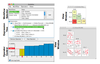 DimStiller
 MulteeSum
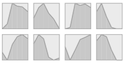 Pathline
 Mizbee
 Glimmer
 GrouseFlocks, Grouse
 SPF
SPF
 TopoLayout
 Cerebral
 SequenceJuxtaposer
 TreeJuxtaposer
 HypViewer 1.0
 Site Manager 1.1
 Geomview
 Triangle Tiling
 WebOOGL
 Caidants